
Last checked: November 18, 2026. Every fact below links to the official page it came from.
Under the Americans with Disabilities Act, stores, restaurants, hotels, theaters and state and local government buildings must let you in with your cane, walker, rollator or crutches, anywhere the public can walk. Wheelchairs and mobility scooters designed for people with disabilities are also allowed. Staff can’t ask about your disability.
Canes, walkers and crutches
The Justice Department’s ADA guidance says covered businesses and governments must allow people with disabilities who use “manually-powered mobility aids such as walkers, crutches, canes”, braces and similar devices into all areas open to pedestrians (ADA.gov: Wheelchairs, mobility aids, and other power-driven mobility devices).
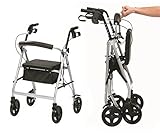
That includes rollators: they’re walkers with wheels and you push them yourself.
Wheelchairs and mobility scooters
The ADA defines a wheelchair as “a manually-operated or power-driven device designed primarily for use by an individual with a mobility disability”. A mobility scooter made for people with disabilities fits that definition, so the same rule applies: it goes where pedestrians go.
Other powered devices, like Segways or golf carts
Devices that weren’t designed for disability, which the ADA calls “other power-driven mobility devices”, are treated differently. A business can only keep a type of device out for real safety reasons, based on these factors:
- the device’s type, size, weight, dimensions and speed
- how busy the place is
- the building’s layout and how it operates, including space and storage
- whether safety rules, such as a speed limit, would make it safe
- whether it would seriously harm the environment or cultural resources
These decisions are about types of device, not about how you personally use it.
What staff can and can’t ask
- “A covered entity cannot ask people about their disabilities.”
- For a powered device that isn’t a wheelchair, staff can ask for credible assurance that you need it. A state disability parking placard or other state proof of disability must be accepted “on its face”.
- Saying out loud that you need the device for a mobility disability also counts, unless staff see something that clearly contradicts it.
If you’re turned away
For a store, restaurant or local government, you can file a complaint with the Justice Department’s Civil Rights Division online or by mail. Airline problems go to the Department of Transportation, housing to HUD, and work to the EEOC. The ADA Information Line is 800-514-0301 (voice) or 1-833-610-1264 (TTY) (ADA.gov: File a complaint).
Popular rollator walkers on Amazon
These are current Amazon bestsellers, shown automatically from Amazon UK. They are not our picks and we have not tested them. Amazon shows you the price and delivery for your country. Check the size, weight limit and returns policy before you buy.



More for the US: US walking aids hub. By type: Walking canes · Walkers · Rollator walkers · Wheelchairs and transport chairs · Mobility scooters.
Related guides
- Taking a walker or cane on a plane in the US
- Does Medicare cover walkers and rollators?
- Using a rollator safely
This page explains federal rules in general and isn’t legal advice. State laws can give you more protection.