
Published 19 November 2026 in the WalkingAids.net Journal (Professional resources). Sources checked 19 November 2026. Written by the WalkingAids.net editorial team. Not medically reviewed: no doctor, physiotherapist or occupational therapist has checked this article.
For therapists, carers and support staff. This is a reference summary of published guidance, not a clinical protocol. Follow your own organisation’s policies and the manufacturer’s instructions. It has not been reviewed by a clinician.
“Walking frame” covers very different designs. They trade stability against speed and a natural walking pattern, and each suits a different person. This reference sets out the main designs and what published sources say about each.
The main designs
| Design | How it is used | Published points |
|---|---|---|
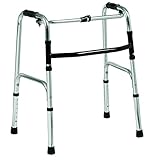
| Standard (pick-up, Zimmer) frame | Four rubber feet; lifted and placed forward each step | “The most stable walker, but it results in a slower gait” (AAFP 2011). Listed for severe myopathy or neuropathy, cerebellar ataxia and lower-limb fractures (AAFP 2021). |
| Two-wheeled (front-wheeled) frame | Wheels at the front, feet or glides at the back; pushed, not lifted | “Less stable than a standard walker, but maintains a more normal gait pattern” (AAFP 2011). Listed for lower-limb arthritis, poor balance, paraparesis and parkinsonism (AAFP 2021). In parkinsonism, front-wheeled walkers “may reduce freezing compared with standard walkers” (AAFP 2011). |
| Three-wheeled rollator | Hand brakes, narrow front, tight turning | Four-wheeled frames are generally more stable than three-wheeled ones, though heavier (Parkinson’s UK). |
| Four-wheeled rollator | Hand brakes, usually a seat and basket | For higher-functioning people who need little weight-bearing support; listed for reduced endurance, spinal stenosis, lung disease and heart failure (AAFP 2021). “Can roll forward unexpectedly and result in a fall” (AAFP 2011). |
| Gutter (forearm support) frame | Forearms rest in padded troughs; weight taken through the forearms | Platform supports suit “elbow contractures or … weak or painful hands or wrists” (AAFP 2011). NHS safety leaflets cover gutter frames alongside Zimmer frames (WWL NHS). |
| Trolley walker | Indoor frame with trays, designed to be leaned on | Only trolleys designed as walking aids should take weight; kitchen trolleys “are not designed to support the weight of an individual” (Sheffield City Council). |
| Posterior (reverse) walker | Frame sits behind the user; mainly used by children | Developed in the mid-1980s for children with cerebral palsy; “There is evidence of their advantages over more traditional anterior walkers”, but no evidence on setting handle height (Health Research Authority). |
| Hemi walker | One-handed side frame | Used for one-sided weakness. None of the sources we checked give evidence on it; the reviews recommend quad canes for hemiplegia (AAFP 2011). |
Trade-offs to explain to users
- Stability against pace. Lifting a standard frame gives the most stability but a stop-start pattern. Wheels give a more continuous gait but less support.
- Posture. Walkers “can be difficult to maneuver and can result in poor back posture and reduced arm swing” (AAFP 2011). Set the height correctly and encourage walking inside the frame.
- Brakes. Rollators need reliable hand function to brake and lock.
- Space. Check doorways and turning space before issue: doorway width checker.
- Stairs. No frame is used on stairs. See walking aids and stairs.
Compare real products
The Walking Aids Index lists frames and rollators with sourced specifications: weight, maximum user weight, handle height, widths and folded size, each labelled as manufacturer verified or retailer stated.
| Product | Product weight | Maximum user weight | Handle height | Overall width |
|---|---|---|---|---|
| Aidapt adjustable folding walking frame Walking frame (no wheels) | 2.4 kg (5 lb) R Retailer stated | 133 kg (293 lb) R Retailer stated | 82–99 cm (32.3–39 in) R Retailer stated | 52 cm (20.5 in) R Retailer stated |
| AnteaMED folding walker with 2 wheels Wheeled walker (2 wheels) | 2.4 kg (5 lb) R Retailer stated | 113 kg (249 lb) R Retailer stated | 76–92.5 cm (29.9–36.4 in) R Retailer stated | 62 cm (24.4 in) R Retailer stated |
| VEVOR folding walking frame Walking frame (no wheels) | 2.5 kg (6 lb) R Retailer stated | 159–168 kg (351–370 lb) ! Needs checking | 82–100 cm (32.3–39.4 in) R Retailer stated | Not published – Not published |
| Elite Care folding aluminium walking frame Walking frame (no wheels) | 2.2–2.6 kg (5–6 lb) ! Needs checking | 115 kg (254 lb) R Retailer stated | 72–85 cm (28.3–33.5 in) ! Needs checking | 56 cm (22 in) R Retailer stated |
| Elite Care Hi-Riser walking frame Walking frame (no wheels) | 2.6 kg (6 lb) R Retailer stated | 115 kg (254 lb) R Retailer stated | 77–95 cm (30.3–37.4 in) R Retailer stated | 59 cm (23.2 in) R Retailer stated |
| Days reciprocal walking frame Reciprocal walking frame | 2.6 kg (6 lb) ✓ Manufacturer verified | 125 kg (276 lb) ✓ Manufacturer verified | 78–90 cm (30.7–35.4 in) ✓ Manufacturer verified | 55 cm (21.7 in) ✓ Manufacturer verified |
| DELOG narrow folding walker Wheeled walker (2 wheels) | 2.7 kg (6 lb) R Retailer stated | 136–159 kg (300–351 lb) ! Needs checking | 76.2–94 cm (30–37 in) R Retailer stated | 43.2–55.9 cm (17–22 in) R Retailer stated |
| Days adjustable folding walking frame Walking frame (no wheels) | 2.7 kg (6 lb) ✓ Manufacturer verified | 125 kg (276 lb) ✓ Manufacturer verified | 78–90 cm (30.7–35.4 in) ✓ Manufacturer verified | 55 cm (21.7 in) ✓ Manufacturer verified |
| OrtoPrime folding walking frame without wheels Walking frame (no wheels) | 2.7 kg (6 lb) R Retailer stated | 120 kg (265 lb) R Retailer stated | Not published – Not published | Not published – Not published |
| Drive DeVilbiss folding aluminium walking frame Walking frame (no wheels) | 3 kg (7 lb) R Retailer stated | 167–180 kg (368–397 lb) ! Needs checking | 80–98 cm (31.5–38.6 in) ! Needs checking | 64 cm (25.2 in) R Retailer stated |
| Drive DeVilbiss folding walking frame with wheels Wheeled walker (2 wheels) | 3 kg (7 lb) R Retailer stated | 180 kg (397 lb) R Retailer stated | 81.3–99.1 cm (32–39 in) R Retailer stated | 63.5 cm (25 in) R Retailer stated |
| Days folding bariatric walking frame Walking frame (no wheels) | 3 kg (7 lb) ✓ Manufacturer verified | 325 kg (717 lb) ✓ Manufacturer verified | 76–101 cm (29.9–39.8 in) ✓ Manufacturer verified | 71 cm (28 in) ✓ Manufacturer verified |
| Mobiclinic Mezquita folding walking frame Walking frame (no wheels) | 3.4 kg (7 lb) R Retailer stated | 100 kg (220 lb) R Retailer stated | 75.5–93 cm (29.7–36.6 in) R Retailer stated | 56 cm (22 in) R Retailer stated |
| Drive Medical two-button folding walker with 5-inch wheels Wheeled walker (2 wheels) | 3.4 kg (7 lb) ✓ Manufacturer verified | 159 kg (351 lb) ✓ Manufacturer verified | 81.3–99.1 cm (32–39 in) ✓ Manufacturer verified | 61 cm (24 in) ✓ Manufacturer verified |
| PEPE Mobility narrow folding walker with wheels Wheeled walker (2 wheels) | 3.5 kg (8 lb) R Retailer stated | 100 kg (220 lb) R Retailer stated | from 77 cm ! Needs checking | Not published – Not published |
| Stander Space Saver folding walker Wheeled walker (2 wheels) | 3.6 kg (8 lb) R Retailer stated | 136–181 kg (300–399 lb) ! Needs checking | 82.6–99.1 cm (32.5–39 in) R Retailer stated | Not published – Not published |
| Days wheeled forearm walking frame (platform walker) Platform (forearm) walker | 4 kg (9 lb) ✓ Manufacturer verified | 160 kg (353 lb) ✓ Manufacturer verified | 109–119 cm (42.9–46.9 in) ✓ Manufacturer verified | 75.5 cm (29.7 in) ✓ Manufacturer verified |
| Medline heavy-duty bariatric extra-wide walker Wheeled walker (2 wheels) | 4.1 kg (9 lb) R Retailer stated | 272 kg (600 lb) R Retailer stated | 78.7–104.1 cm (31–41 in) R Retailer stated | 68.6 cm (27 in) R Retailer stated |
| Rifton Pacer gait trainer, Large (K640) Gait trainer | 11.3 kg (25 lb) ✓ Manufacturer verified | 90.7 kg (200 lb) ✓ Manufacturer verified | 81.3–119.4 cm (32–47 in) ✓ Manufacturer verified | 71.1 cm (28 in) ✓ Manufacturer verified |
| NRS Healthcare Walk Safe front-wheeled walking frame Wheeled walker (2 wheels) | Not published – Not published | 160 kg (353 lb) ✓ Manufacturer verified | 75–95 cm (29.5–37.4 in) ✓ Manufacturer verified | 56–68 cm (22–26.8 in) ✓ Manufacturer verified |
Sources
All checked on 19 November 2026. Where a source is older or past its own review date we say so in the text.
- Bradley SM, Hernandez CR. Geriatric Assistive Devices. American Family Physician 2011;84(4):405-411 (published 15 August 2011).
- Sehgal M, Jacobs J, Biggs WS. Mobility Assistive Device Use in Older Adults. American Family Physician 2021;103(12):737-744 (published 15 June 2021).
- Parkinson's UK: Equipment to help you get around (updated 10 July 2026).
- Wrightington, Wigan and Leigh NHS FT: Safety guide to a Zimmer frame or gutter frame (version 8) (updated 18 June 2026).
- Sheffield City Council: Kitchen trolley or caddy (undated web page).
- Health Research Authority: Effects of altering handle height of posterior walkers (research summary) (2015).
Popular walking frames on Amazon UK
These are Amazon UK's current bestsellers, shown automatically. They are not our picks and we have not tested them. Prices come from Amazon and can change. Check the size, weight limit and returns policy before you buy.



Related on WalkingAids.net
- Walking frames: a complete guide
- Rollators guide
- How to use a walking frame
- Rollators compared
- Walking aid names by country
About this article. We wrote it from the published sources listed above; we have not tested the equipment or assessed anyone. It is general information, not advice for you, and it does not replace an assessment by a physiotherapist, occupational therapist or doctor. Read our editorial policy. Spotted an error or out-of-date source? Tell us and we will recheck it.