
Last updated: · Published by WalkingAids.net · How we review products
Independent guides to walking aids for people in the UK. Most walking sticks and frames can be borrowed from the NHS, so we start there. Then we cover help with costs, VAT relief and what to look for if you buy your own.

Getting a walking aid in the UK, step by step
-
Ask the NHS
NHS.uk says you “can borrow some types of walking sticks” and “can borrow a walking frame” from the NHS. Ask your GP, a physiotherapist, an occupational therapist or hospital staff. You “might have to pay a small deposit”.
-
Ask your council about the home
Councils lend daily living equipment, such as grab rails, after a needs assessment. In England, items they provide costing £1,000 or less must be free. Some councils say walking aids aren’t theirs to supply.
-
Or buy your own
If you’re disabled or have a long-term illness, you may be able to buy an aid designed for disabled people without paying VAT. Check the height is right before you use it.
Sources: NHS.uk, reviewed 8 April 2026; SI 2014/2672, regulation 3; GOV.UK: VAT relief for disabled people. Full details, nation by nation: How to get a free walking aid in the UK.
What walking aids cost in the UK
Prices from NHS.uk, sold online and in mobility shops.
Choose a walking aid
Start with the type of aid. Not sure which? Read walking stick, frame or rollator: how they differ.

Walking sticks
Light support on one side, for balance or a painful hip, knee or ankle.

Walking frames
Four legs and the most stability, mostly indoors. Often called a Zimmer frame.
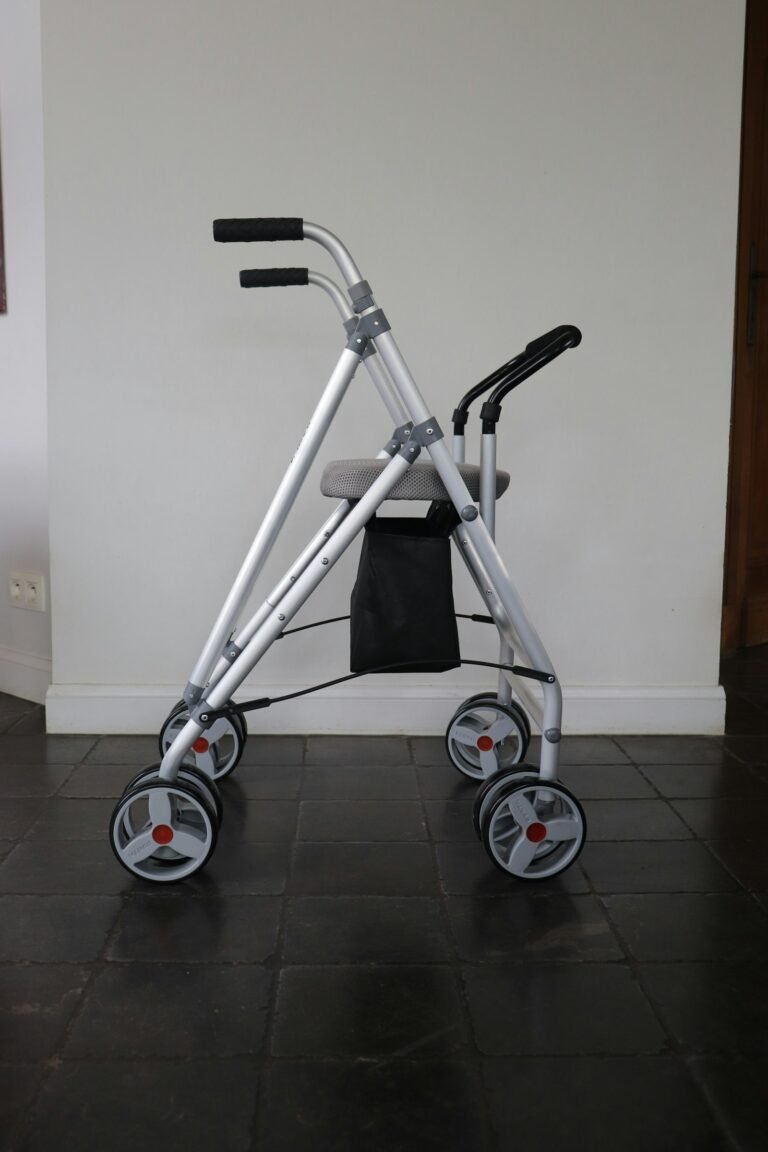
Rollators
A frame on wheels with brakes and usually a seat, for walking further.

Wheelchairs
For longer distances, or when walking isn’t possible.
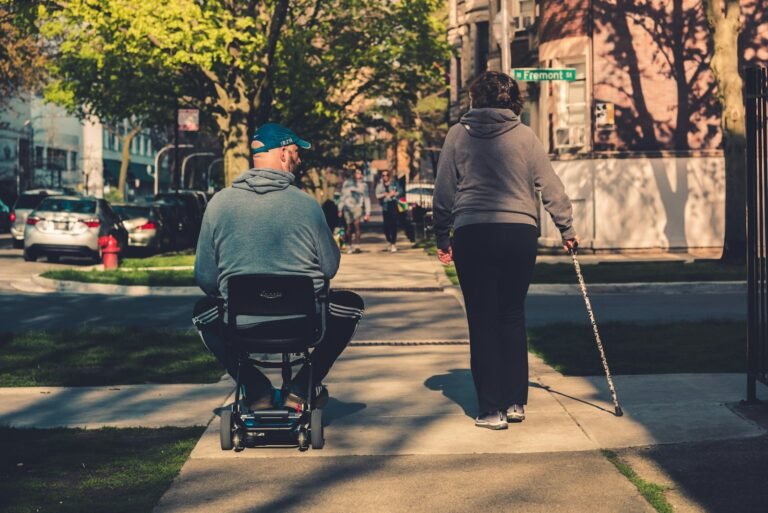
Mobility scooters
Powered, for getting out without walking far.
Popular on Amazon UK right now
These are Amazon’s current bestsellers, not our picks. Our own UK buying guides are coming soon.
These are Amazon UK's current bestsellers, shown automatically. They are not our picks and we have not tested them. Prices come from Amazon and can change. Check the size, weight limit and returns policy before you buy.Popular rollators on Amazon UK


Buses, trains and travel
In London, TfL accepts “wheeled mobility walkers up to a width of 60cm and up to a length of 100cm” on its buses. Other bus companies and train operators set their own rules, and the wheelchair space is for wheelchair users first. Our guide compares the main operators: taking a rollator or walking aid on UK buses, trains and planes.
Product shortlists for the UK
Shortlists by need, built from published specifications and what is actually on sale here. We have not tested these products ourselves.
- Best portable mobility scooters in the UK (2026): 4 picks
- Best lightweight wheelchairs in the UK (2026): 5 picks by need
- Best walking frames (Zimmer frames) in the UK (2026): 5 picks by need
- Best rollators (walkers with a seat) in the UK (2026): 6 picks by need
- Best walking sticks in the UK (2026): 6 picks by need
All UK guides
- Specification finder: compare walking aids by weight, user limit and handle height
- Mobility scooter rules in the UK: class 2 vs class 3, roads and DVLA
- Can a walking aid get you a Blue Badge? UK rules explained
- How to get a free walking aid in the UK: NHS, council and nation by nation
- VAT relief on walking aids: who qualifies and how to claim
- Taking a rollator or walking aid on UK buses, trains and planes
- Walking stick height check: a printable 4-point guide
- Walking stick, frame or rollator: how they differ
- Using a rollator safely: brakes, seat, kerbs and checks
- Walking aid names by country
Common questions in the UK
Can I get a walking stick or frame free on the NHS?
You can borrow some types of walking stick and a walking frame from the NHS. Ask your GP, a physiotherapist, an occupational therapist or hospital staff. You might have to pay a small deposit. (NHS.uk)
Do I pay VAT on a walking aid?
Not if you’re disabled or have a long-term illness and the product is designed for disabled people. You don’t qualify if you’re older but not disabled, or only temporarily injured. You confirm it to the seller in writing. Our VAT relief guide explains it.
What’s the difference between a walking frame and a rollator?
A walking frame has four legs and you lift or slide it with each step. A rollator has wheels, hand brakes and usually a seat. TfL calls rollators “wheeled mobility walkers”.
Is a Zimmer frame the same as a walking frame?
Yes. Many people in the UK call any walking frame a Zimmer frame.