
Last updated: · Published by WalkingAids.net · How we review products
How we make money: links marked are affiliate links. We earn a commission if you buy through them, at no extra cost to you. This never decides which products we recommend. Read our affiliate disclosure.
Rollators in Australia: how the NDIS and aged care can help, and how to use the brakes and seat safely. Every fact links to the official page it came from.
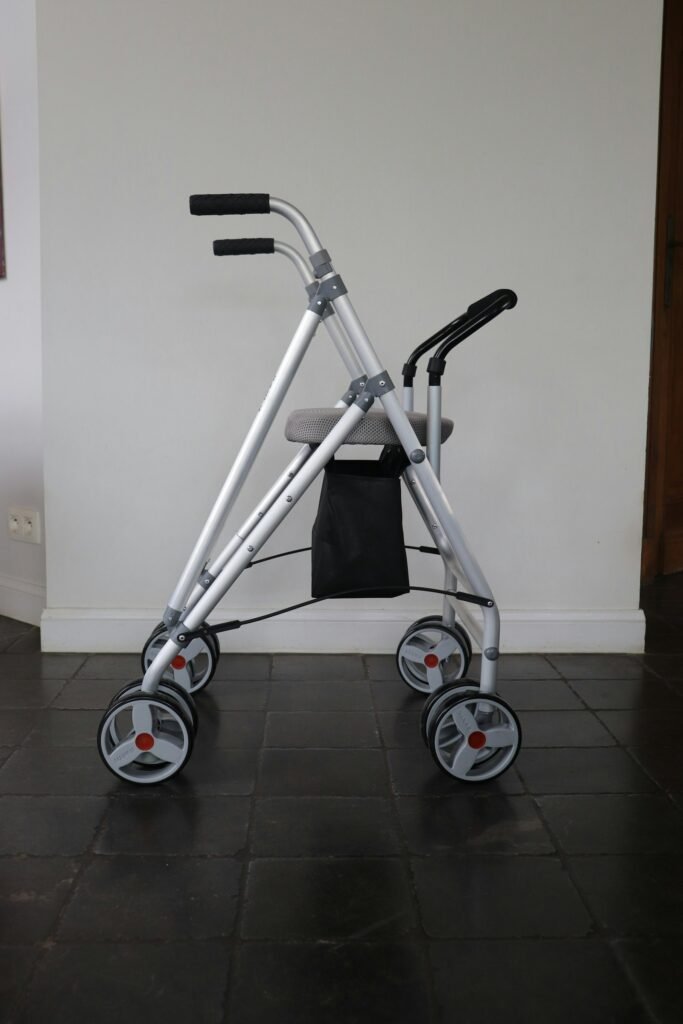
NDIS“Four-wheeled walker frames” are listed as low-cost assistive technology.
Under $1,500Low-cost assistive technology costs less than $1,500, and you don’t need quotes first.
Aged careMy Aged Care can help you “stay mobile” after an aged care assessment.
Help with the cost
- NDIS participants: the NDIS lists “four-wheeled walker frames” as low-cost assistive technology, which costs less than $1,500. For low-cost, low-risk items you don’t need to send quotes, evidence or assessments first (NDIS: low-cost assistive technology).
- Older Australians: My Aged Care lists “Help to stay mobile, such as wheelchairs and walking frames”, after an aged care assessment (My Aged Care).
More: NDIS and My Aged Care funding. Veterans: walking aids through DVA.
Using a rollator safely
-
Brakes
“Push down breaks to lock aid.” For pressure brakes: “test by pushing down.”
-
Walking
“Place the frame one step ahead of you.”
-
Sitting
Lock the brakes first. “Sit slowly as aid can move slightly.”
At a kerb, “Move the frame close to the edge of the kerb.” “Regularly check your walking frame”, and “Do not use the frame to go up or downstairs” (NHS Lanarkshire physiotherapy). Brakes, seat and kerbs step by step: our complete rollator guide.
More for Australia
Not medical advice. This guide describes product features and specifications. It can't tell you which aid is right for you. Please speak to a GP, physiotherapist or occupational therapist before choosing a walking aid. Medical disclaimer.