
Last updated: · Published by WalkingAids.net · How we review products
Crutches take some getting used to, especially on stairs. These are the steps two NHS hospital trusts give their own patients: how crutches should fit, how to walk, how to stand and sit, and how to manage stairs safely.
Sources: Gloucestershire Hospitals NHS Foundation Trust: How to use crutches (reviewed February 2025) and Royal Berkshire NHS Foundation Trust: Using (forearm) crutches (December 2025), both checked 16 November 2026. Always follow the instructions your own physiotherapist or doctor gives you, especially about how much weight to put on your leg.
Check the fit
Gloucestershire Hospitals says staff adjust crutches to your height when they’re issued, and that using them at the wrong height “can lead to back pain”. Keep the handles facing forward and your arms close to your sides.
Walking without putting weight on your leg
- Move both crutches forward together.
- Keep the injured leg off the ground, in front of you.
- Take your weight through your arms.
- Bring your good leg forward, past the crutches.
Royal Berkshire gives the same sequence and says to keep the crutches “fairly close to your body”.
Walking with some weight on your leg
If you’ve been told you can put some weight through the injured leg, Royal Berkshire says to “bear only the amount of weight as suggested by your doctor”. Gloucestershire adds that the amount “will change as things improve and you have less pain”.
Standing up and sitting down
- Standing up: hold both crutches in one hand, push up from the chair, and move one crutch to the other hand once you’re steady.
- Sitting down: stand with the chair right behind you, so you feel its edge on the back of your knees. Hold both crutches in one hand, grip the chair arm with the other, and lower yourself slowly.
Stairs
Both trusts say going up and down on your bottom can be the safer option. If you use crutches on stairs, Gloucestershire says to do it only where there is a suitable handrail: hold the rail in one hand and both crutches in the other.
| Direction | Order |
|---|---|
| Going up | Good leg, then injured leg, then crutch |
| Going down | Crutch, then injured leg, then good leg |
A simple way to remember it: the good leg leads going up, and the crutch leads going down.
Staying safe
- “Check that the rubber ends are not worn or clogged with dirt or stones”, and check the crutches regularly for damage.
- Move loose rugs and other obstacles out of the way, and avoid wet floors.
- Outdoors, watch for uneven ground, wet leaves and ice.
When to get help
Gloucestershire Hospitals says that if your symptoms aren’t improving or your pain is getting worse, “you should contact NHS 111 for advice”. For problems with the crutches themselves, Royal Berkshire says “please contact your doctor”.
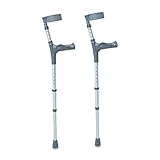
Popular crutches on Amazon UK
These are Amazon UK's current bestsellers, shown automatically. They are not our picks and we have not tested them. Prices come from Amazon and can change. Check the size, weight limit and returns policy before you buy.


Related guides
- Walking stick, frame or rollator: how they differ
- How to use a walking frame safely
- Walking stick height check: a printable 4-point guide
- Weight-bearing instructions explained
- Walking aids and stairs